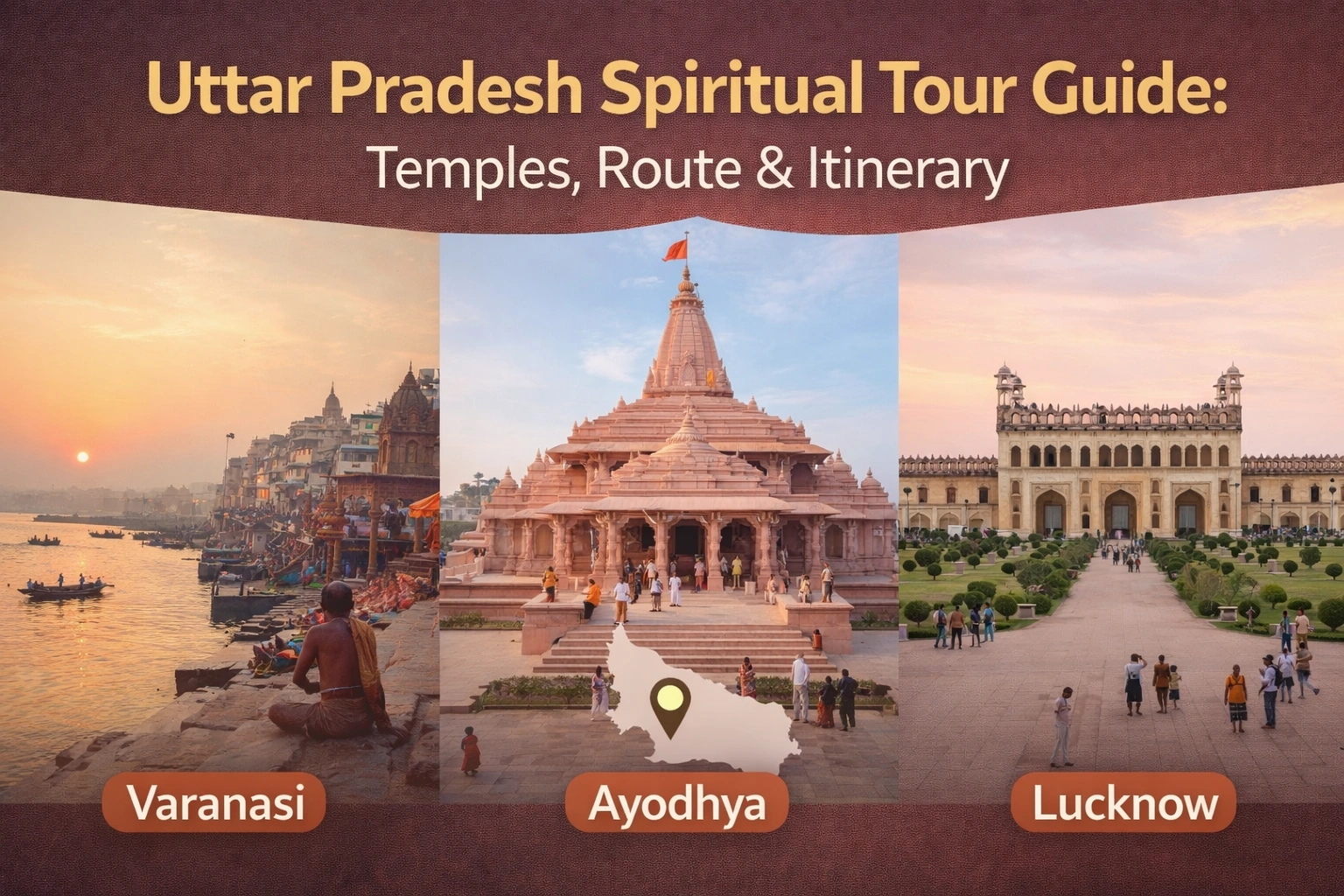
Uttar Pradesh Spiritual Tour Plan: If you’re planning a North India trip that feels meaningful (not just “photos and hotels”), this five-place route in Uttar Pradesh is a strong choice. The challenge is that these destinations are very different from each other—Varanasi is intense and spiritual, Ayodhya is devotional and fast-developing, Chitrakoot is slow and forested, Vindhyachal is a focused temple town, and Lucknow is cultural and food-led. If you don’t plan the order and pace, people often end up exhausted, stuck in crowds, or disappointed because they expected a “touristy” experience.
I’m writing this like I would advise a friend: what to do, what to skip, how to move between places, and the small mistakes that ruin a good trip.
Step 1:For Uttar Pradesh Spiritual Tour Plan Choose the right travel rhythm
These places work best when you alternate intensity with rest:
- Varanasi (high energy) → Ayodhya (structured, devotional) → Chitrakoot (slow recovery) → Vindhyachal (short temple stop) → Lucknow (food + heritage + comfort)
If you’re coming from the US (or you’re not used to crowds), build in “breathing space.” I’ve seen travelers try to do Varanasi in one day and then swear off the whole route. Give it time.
Step 2: Understand each place—what it is and what it isn’t
1) Varanasi: the city that doesn’t whisper
Varanasi is one of those places that feels alive from the minute you arrive—lanes, chants, cows, motorbikes, temple bells, and river air. The ghats are the heart of it. Early mornings are calmer; evenings are dramatic.
What to do (from experience):
- Go to the ghats at sunrise. The river looks completely different than it does later.
- Take a short boat ride only if you’re comfortable with crowds and bargaining.
- Watch Ganga Aarti once, but arrive early and keep expectations realistic—it’s devotional, not a “show.”
Common mistake: trying to see everything by car.
Fix: walk, and keep your phone away in tight lanes.
2) Ayodhya: devotional, disciplined, and improving fast
Ayodhya is visited mainly for faith and history. The atmosphere is more organized than Varanasi, and you’ll notice new infrastructure. It’s a place where people often feel emotional—plan your day around temple timings and crowd flow.
What helps:
- Start early, because mid-day crowds can become tiring.
- Keep footwear easy to remove and carry a small cloth bag for it.
Common mistake: expecting “shopping + sightseeing” like a typical city.
Fix: treat it as a devotional stop; keep the plan simple and respectful.
3) Chitrakoot: where you go to slow down
Chitrakoot feels like a pause button. The vibe is quieter—more nature, more walking, less noise. People often come here to spend time in a reflective mood. It’s also the best place in this route to recover from travel fatigue.
What to do:
- Plan for walking. Wear comfortable shoes and keep water with you.
- If you like calm evenings, sit near the river/ghat area and avoid rushing from point to point.
Common mistake: arriving late evening and leaving early morning.
Fix: give Chitrakoot at least one full day. This is where the trip becomes “human,” not just busy.
4) Vindhyachal: small town, big faith
Vindhyachal is known mainly for the temple circuit. It’s not a place you “explore” like Lucknow—you visit for a focused spiritual experience. If you manage timing well, it becomes a smooth half-day stop.
What to do:
- Start early or go on a weekday if possible.
- Keep cash for small purchases, and be patient in queues.
Common mistake: overpacking this stop with too many plans.
Fix: treat it like a clean, simple visit—temple, a meal, rest, move on.
5) Lucknow: culture, history, and the best “comfort reset”
After multiple spiritual destinations, Lucknow feels like a soft landing. It’s more modern, more spacious, and great for people who want history without the chaos of narrow lanes.
What to do:
- Visit at least one heritage area/monument, but don’t cram too much.
- Try local food slowly—Lucknow meals can be rich, and travelers often overdo it on day one.
Common mistake: planning a full-day market run after long travel.
Fix: do a relaxed heritage morning, rest, then do food in the evening.
Step 3: Use this simple route plan (copy this)
7–9 Day Suggested Itinerary
| Days | Place | Pace | Best For |
|---|---|---|---|
| 2 | Varanasi | Busy | Ghats, sunrise, devotional energy |
| 1–2 | Ayodhya | Medium | Temple visit, calm routine |
| 2 | Chitrakoot | Slow | Nature + rest + reflection |
| 0.5–1 | Vindhyachal | Short | Focused temple stop |
| 2 | Lucknow | Comfortable | Heritage + food + shopping |
If you have only 5–6 days, reduce one day from Ayodhya or Lucknow—but don’t rush Varanasi and Chitrakoot at the same time.
Step 4: Practical travel checklist (this saves real headaches)
- Comfortable footwear you can remove quickly
- Light scarf/dupatta (useful for sun + temple etiquette)
- A small day bag with water, ORS, and tissues
- Cash for small vendors and temple areas
- One warm layer for early mornings (season-dependent)
- A “buffer mindset” for crowds and delays
- Offline maps downloaded (network can be patchy in dense areas)
Real-life mistakes travelers make (and quick fixes)
Mistake 1: Planning only “Instagram spots.”
Fix: give each place one slow hour with no camera. That’s when it feels real.
Mistake 2: Eating heavy street food every meal.
Fix: mix it—one adventurous meal, one simple meal. Hydrate more than you think.
Mistake 3: Wearing hard-to-remove shoes in temple-heavy cities.
Fix: slip-on sandals (with a good sole) make your day easier.
Mistake 4: Trying to “cover everything.”
Fix: pick 2–3 meaningful experiences per place. Your trip will feel richer.
Takeaway: This route works when you travel with intention, not speed
Varanasi gives you depth, Ayodhya gives structure, Chitrakoot gives calm, Vindhyachal gives focused devotion, and Lucknow gives culture and comfort. If you plan the pace and respect how each place functions, this becomes a trip people remember for years—not because it was perfect, but because it felt honest.
Internal linking ideas for your site: “best time to visit UP,” “temple etiquette tips,” “what to pack for spiritual trips,” “safe travel tips for families.”
Read This Also: Top 5 Clam Place Pryagraj for Spiritual & Peaceful Time Must Visiting
FAQs
Q1. What is included in a Uttar Pradesh spiritual tour?
A Uttar Pradesh spiritual tour usually includes Varanasi, Ayodhya, Chitrakoot, Vindhyachal, and Lucknow, offering a mix of devotion, history, and culture.
Q2. How many days are needed for a Uttar Pradesh spiritual tour?
A well-planned Uttar Pradesh spiritual tour needs around 7–9 days to travel comfortably and avoid rushing between destinations.
Q3. What is the best route for a Uttar Pradesh spiritual tour?
The recommended route is Varanasi to Ayodhya, followed by Chitrakoot, Vindhyachal, and ending in Lucknow for a balanced experience.
Q4. Is Uttar Pradesh spiritual tour suitable for first-time travelers?
Yes, first-time travelers can enjoy a Uttar Pradesh spiritual tour if they plan slower travel days and choose reliable transport and stays.
Q5. What should not be missed during a Uttar Pradesh spiritual tour?
Sunrise at Varanasi ghats and a peaceful day in Chitrakoot are experiences that should not be missed on a Uttar Pradesh spiritual tour.
Q6. Which destination is best if I want a calmer experience?
Chitrakoot is the calmest. Go there when you want nature, quieter mornings, and less sensory overload.
Q7. What’s one thing I should not skip?
In Varanasi, don’t skip sunrise at the ghats. In Lucknow, don’t skip a heritage walk or one cultural stop—otherwise it feels like any city.
Read This Also: Outdated Decor 2026: Home Design Mistakes to Avoid & What to Use Instead