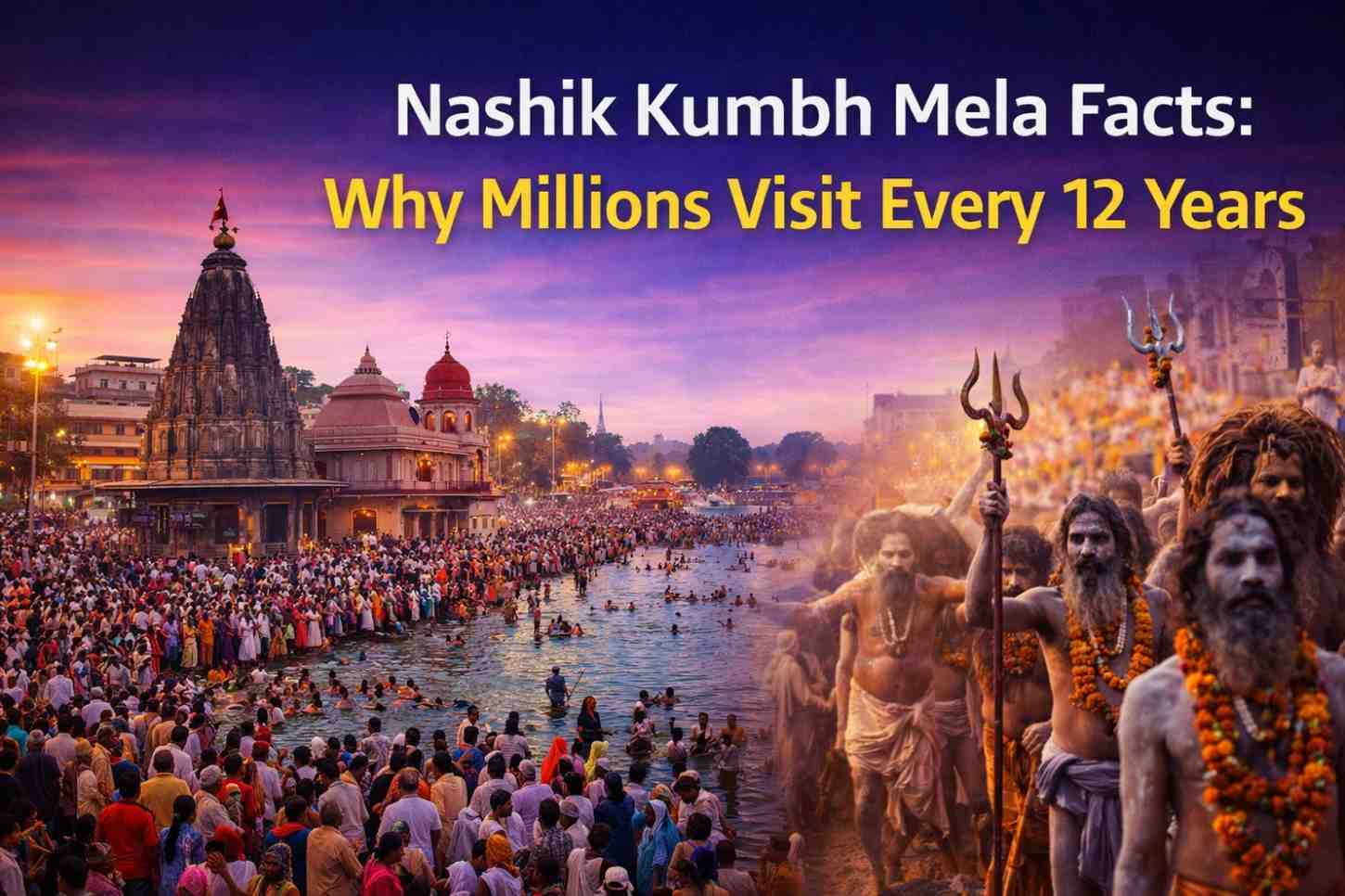
Nashik Kumbh Mela Facts: The city of Nashik situated in the state of Maharashtra is the site for one of the largest spiritual events in the world. The Nashik Kumbh Mela attracts crores of devotees, saints, and tourists who take ritualistic dips, offer rituals, and seek spiritual enlightenment.
Much has been said and heard about the enormous size of Kumbh Mela. But little is known or heard about the awareness regarding the uniqueness of Nashik Kumbh Mela when compared to other Kumbh Melas held at various locations across India.
From personal experiences gained while talking to tourists and travelers who have visited Kumbh Mela, it is clear that Kumbh Mela is not only a spiritual experience. Kumbh Mela is an experience of tradition, discipline, and a sense of community promoted by the congregation of crores of devotees attending the event.
The purpose of writing this article is to offer interesting facts on Nashik Kumbh Mela, its history, rituals, and other interesting tips for tourists who want to visit Kumbh Mela.
The Nashik Kumbh Mela Occurs Only Once in 12 Years
One of the most interesting features of the Nashik Kumbh Mela is that it occurs only once in 12 years. The timings of the event are determined according to the specific planetary positions of planets such as Jupiter, Sun, and Moon. At these specific times, Nashik is one of the four holy sites that hosts the Kumbh Mela.
This rare timing is one reason millions of pilgrims feel a strong urge to attend at least once in their lifetime.
Nashik Is One of Only Four Kumbh Mela Locations
Many people are surprised to learn that Kumbh Mela does not happen in every city.
It is held in only four places in India:
Location River State
| Location | River | State |
|---|---|---|
| Prayagraj | Ganga, Yamuna, Saraswati | Uttar Pradesh |
| Haridwar | Ganga | Uttarakhand |
| Ujjain | Shipra | Madhya Pradesh |
| Nashik | Godavari | Maharashtra |
Nashik’s event takes place along the Godavari River, which is often called the Dakshin Ganga or “Ganges of the South.”
Read This Also: Best Places to Visit Near Haridwar Kumbh Mela Must See!
The Festival Is Linked to Hindu Mythology
The origin of the Kumbh Mela comes from an ancient story in Hindu mythology known as the Samudra Manthan, or the churning of the ocean.
According to the story, the reason for the fight between the gods and demons was the pot of nectar of immortality. The story goes on to say that during the fight, the nectar fell at four different locations, one of which is Nashik.
This mythological connection explains why ritual bathing during the festival is considered spiritually significant.
The Holy Bath at Ramkund Is the Center of the Festival
During the Nashik Kumbh Mela, one place becomes the focus of most religious activity: Ramkund.
Ramkund is a sacred bathing ghat on the Godavari River where devotees believe that taking a dip helps cleanse spiritual impurities.
From conversations with people who have attended the festival, the atmosphere during major bathing days is something difficult to describe. The riverbanks fill with pilgrims, monks, and visitors from across India and abroad.
The Processions of Saints Are One of the Most Unique Sights
A defining moment of the Kumbh Mela is the Shahi Snan, or royal bath.
On specific days, the Akhadas, who are groups of ascetics, enter the river in processions.
These processions include:
- Naga sadhus, who are spiritual discipline adherents
- Religious leaders on decorated chariots
- The processions themselves include traditional music and chanting
One of the most memorable experiences is to watch the processions.
Nashik Kumbh Mela Requires Years of Preparation
One of the things that the visitor to the Mela never thinks of is the amount of preparation required to hold the Mela.
The local authorities make arrangements years before the Mela to take care of:
- Transportation
- Temporary accommodation
- Sanitation
- Crowd control
- Medical facilities
When millions of people congregate at one location, proper planning is the key to safety.
Many Visitors Come for Cultural Curiosity, Not Just Religion
The Kumbh Mela is primarily a spiritual festival, but there are many international travelers who come to the Mela just to observe.
Researchers, photographers, and cultural historians often visit to study:
- Sadhu traditions
- Religious rituals
- Spiritual teachings
- The temporary city that emerges during the festival
From experience, many foreign visitors say the event offers a rare chance to witness living spiritual traditions in India.
Practical Checklist for Visitors Attending Nashik Kumbh Mela
If you are planning to attend the festival, a few things can be done to make it a smoother experience. Here is a list of things that you should keep in mind if you are planning to attend the Nashik Kumbh Mela:
Read This Also: Allahabad HC Private Secretary Recruitment 2026 – 195 Vacancy
Visitor Checklist Why It Matters
- Reach early if you are planning to attend a major bathing day The number of people can be extremely large
- Book your hotel in advance Hotels are usually full during the event
- Follow safety guidelines There are specific routes to enter the venue
- Carry minimal baggage It is difficult to move around with a lot of baggage
- Carry water and be prepared to face the sun It is a long day and it is hot
Some mistakes that first-time visitors to Nashik Kumbh Mela make
There are a few mistakes that people who attend the event over the years point out.
Arriving Without a Plan
Some visitors assume they can easily navigate the city once they arrive. During the Kumbh Mela, roads and routes often change.
Solution: Check official schedules and routes before traveling.
Underestimating Crowd Size
Despite having experience attending other large-scale festivals, people are surprised by the sheer scale.
Solution: Allow extra travel time and follow designated pathways.
Ignoring Local Advice
Local volunteers and authorities usually provide advice on how to move crowds.
Solution: Listen carefully to announcements and guidance from officials.
Key Takeaways
The Nashik Kumbh Mela: A Festival Like No Other
The Nashik Kumbh Mela is not just a festival; it is an event that is a rare amalgamation of mythology, tradition, and spirituality.
A few interesting facts about the event:
• It occurs only once every twelve years.
• It is linked to Hindu mythology.
• There is a huge turnout along the Godavari River.
• Ritualistic processions of saints are a major draw.
For many people, the Nashik Kumbh Mela is not just about their faith and spirituality; it is about experiencing a tradition that is centuries old.
Frequently Asked Questions
1. When is the next Nashik Kumbh Mela expected?
The Nashik Kumbh Mela is held once every twelve years. The exact timing is based on the positions of celestial bodies, which are determined by traditional Hindu astrology.
2. Why is the Godavari River important during the festival?
The Godavari River holds religious significance in Hinduism. Ritualistic bathing in the river is an important part of the Kumbh Mela.
3. What is Shahi Snan?
Shahi Snan is the ceremonial bathing of saints and sadhus. It is one of the major attractions of the Kumbh Mela.
4. Can international visitors attend Nashik Kumbh Mela?
Yes, international visitors attend the Kumbh Mela. People come to witness the religious traditions followed by the visitors.
5. Is Nashik Kumbh Mela safe for travelers?
Yes, the Kumbh Mela is safe for travelers. It is important to make proper arrangements to ensure the safe attendance of visitors.